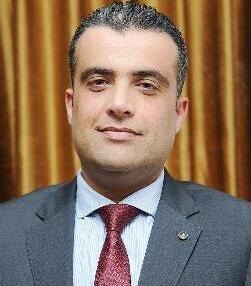
Welcome to the Department of Occupational Safety Engineering (OSE) at Fahad Bin Sultan University!
The Department of Occupational Safety Engineering is committed to excellence in education, professional development, and engineering practice. It serves a vital mission by preparing qualified professionals who can protect human life, safeguard industrial facilities, and support the sustainable development of the Kingdom of Saudi Arabia in alignment with Saudi Vision 2030. The Department offers a modern learning environment supported by specialized laboratories and practical training facilities. The program equips students with the knowledge and applied skills needed to design, implement, and manage occupational safety systems. Its curriculum has been developed with reference to applicable NCAAA requirements and ABET engineering accreditation criteria. FBSU’s location in the Tabuk region creates valuable potential for engagement with major regional development initiatives, including NEOM. As the Kingdom advances large-scale projects, demand continues to grow for occupational safety engineers who can develop proactive risk-management and safety solutions across smart infrastructure, petrochemical industries, transportation, advanced manufacturing, construction, and environmental health. We warmly welcome national and international students, industry partners, and members of the wider community. We invite you to join us in strengthening a proactive safety culture that protects people, resources, and infrastructure. If you have any questions or inquiries, please contact the Department.
Dr. Mohammed H. Alhaag
Assistant Professor, Chairman of Occupational Safety Engineering Department
About Our Department
Established in 2025, the Department reflects Fahad Bin Sultan University’s commitment to excellence in education, scientific research, innovation, and community service. It supports Saudi Vision 2030 priorities related to human-capital development, industrial sustainability, and safe and attractive work environments. The 158-credit-hour undergraduate program combines rigorous theoretical study with laboratory work, field training, and collaborative capstone projects. This integrated structure develops the knowledge, research capability, and engineering skills students need to protect human health and contribute to sustainable national development.
Program Overview
The program prepares students to
- Identify engineering hazards, assess complex risks, and implement effective controls to improve workplace safety.
- Develop and apply occupational health and safety requirements that protect workers and the surrounding environment in accordance with applicable national and international standards.
- Support the Kingdom’s efforts to promote safe, productive, and sustainable workplaces in alignment with Saudi Vision 2030.
- Work effectively across industries through lifelong learning, professional collaboration, and ethical practice within multidisciplinary teams.
Technical Focus Areas
- Fire Protection Engineering
- Industrial Hygiene & Toxicology
- Risk Assessment & Management
- Environmental Health & Safety
- Human Factors & Ergonomics
- Safety in Engineering Systems
Graduate Career Fields
Graduates are prepared to contribute to occupational safety engineering, risk management, compliance, emergency preparedness, and related functions across industrial and public-sector organizations.
Apply and Register
Our Vision & Mission
In alignment with Fahad Bin Sultan University’s commitment to excellence in education, scientific research, innovation, and community service, the Department of Occupational Safety Engineering is dedicated to supporting sustainable national progress.
 Our Vision
To become a leading department in occupational safety engineering education, contributing to FBSU’s vision of excellence in teaching, research, innovation, and community service while supporting the goals of Saudi Vision 2030.
 Our Mission
To provide high-quality education in occupational safety engineering; foster scientific research, creativity, ethical conduct, and lifelong learning; and prepare graduates to safeguard human health and support sustainable development.
Our Core Values
Our core values reflect our commitment to academic excellence, professional integrity, continuous learning, collaboration, and meaningful engagement with society and industry.

Academic & Personal Integrity
Upholding the highest standards of honesty and ethical conduct

Lifelong Learning
Commitment to continuous growth and knowledge acquisition

Teamwork & Collaboration
Working together to achieve common safety goals

Community Engagement
Active participation in serving society and industry needs
Program Educational Objectives
|
PEO 1 |
Graduates will engineer practical occupational safety and sustainability solutions using broad-based engineering knowledge. |
|
PEO 2 |
Graduates will lead the safe and ethical deployment and management of occupational safety systems across diverse socioeconomic and environmental contexts. |
|
PEO 3 |
Graduates will work effectively and assume leadership roles in multidisciplinary teams, communicate clearly, exercise ethical judgment, and demonstrate global awareness. |
|
PEO 4 |
Graduates will engage in research and innovation and pursue continuous learning and professional growth to adapt to emerging technologies. |
Learning Outcomes
A. ABET Student Outcomes (SOs) , Performance Indicators (PIs), and mapping to NCAAA Program Learning Outcomes (PLOs) and Program Educational Objectives (PEOs).
|
ABET Student Outcome (SO) |
Performance Indicator (PI) |
NCAAA Program Learning Outcome (PLO) |
Supported PEO |
|
1. An ability to identify, formulate, and solve complex engineering problems by applying principles of engineering, science, and mathematics. |
1a. Identify and explain relevant principles of engineering, science, and mathematics. |
K1. Gain knowledge of mathematics, science, and engineering. |
PEO1 |
|
1b. Formulate complex engineering problems by applying principles of engineering, science, and mathematics. |
K2. Outline solutions to engineering problems based on the principles of physical sciences and mathematics. |
PEO1 |
|
|
1c. Apply engineering, science, and mathematics principles to develop solutions for complex engineering problems. |
S1. Solve engineering problems by applying principles of mathematics, science, and engineering. |
PEO1 |
|
|
2. An ability to apply engineering design to produce solutions that meet specified needs with consideration of public health, safety, and welfare, as well as global, cultural, social, environmental, and economic factors. |
2a. Produce a clear needs statement for a design project, identify constraints, and establish criteria for acceptable and desirable solutions. |
S3. Apply modern techniques and skills to produce solutions in global, economic, environmental, and societal contexts for engineering practice. |
PEO2 |
|
2b. Evaluate the economic aspects of engineering solutions and use appropriate techniques to assess and manage risk in product or process design. |
|||
|
3. An ability to communicate effectively with a range of audiences. |
3. Communicate effectively with diverse audiences by adapting the message to the audience’s level of understanding and context. |
S5. Communicate effectively with a range of audiences. |
PEO3 |
|
4. An ability to recognize ethical and professional responsibilities in engineering situations and make informed judgments, which must consider the impact of engineering solutions in global, economic, environmental, and societal contexts. |
4a. Recognize and uphold ethical and professional responsibilities in engineering situations. |
V1. Uphold ethical and professional responsibilities. |
PEO3 |
|
4b. Identify alternative engineering solutions, consider economic, environmental, and societal impacts, and address design conflicts. |
K3. Describe and categorize contemporary engineering-related issues. |
PEO2 |
|
|
5. An ability to function effectively on a team whose members together provide leadership, create a collaborative environment, establish goals, plan tasks, and meet objectives. |
5a. Identify and fulfill team roles, integrate contributions from team members, and make decisions based on objective criteria. |
V2. Function and contribute effectively as a member of a team.
|
PEO3 |
|
5b. Monitor team progress and provide constructive feedback to enhance team performance. |
|||
|
6. An ability to develop and conduct appropriate experimentation, analyze and interpret data, and use engineering judgment to draw conclusions. |
6a. Apply sound laboratory practices and instrumentation skills to measure quantities and collect required data. |
S2. Develop and conduct appropriate experimentation, analyze and interpret data, and use engineering judgment to draw conclusions. |
PEO4 |
|
6b. Use appropriate tools to analyze data, verify and validate experimental results, and account for experimental error. |
|||
|
7. An ability to acquire and apply new knowledge as needed, using appropriate learning strategies. |
7. Demonstrate awareness of the importance of continuous learning and research after graduation and independently locate information relevant to problem-solving. |
K3. Describe and categorize contemporary engineering-related issues. |
PEO4 |
Bachelor of Occupational Safety Engineering
A comprehensive program designed to prepare safety professionals for the challenges of modern industrial environments
Comprehensive Curriculum
158 credit hours covering all aspects of occupational safety engineering
5-Year Program
Structured learning path with practical training and internships
Industry Standards
Aligned with OSHA, NFPA, and ISO 45001 regulations
Hands-on Experience
Laboratory work, field training, and capstone projects
Degree Requirements
University Requirements
College Requirements
Specialization Requirements
Specialization Electives
Program Structure
Foundation Years (1-2)
- Mathematics and Sciences
- Engineering Fundamentals
- Language and Communication
- Introduction to Safety Engineering
Core Years (3-4)
- Specialized Safety Courses
- Fire Protection Engineering
- Industrial Hygiene
- Risk Assessment
Final Year (5)
- Advanced Safety Topics
- Capstone Projects
- Internship Training
- Professional Preparation
Summer Internship Training
SAFE 400 - Summer Internship Training (1 Credit)
Mandatory practical training in industry during the summer before the final year. Students gain hands-on experience in workplace safety environments.
Program Admission Requirements
Admission to the Bachelor’s Degree in Occupational Safety Engineering follows Fahad Bin Sultan University’s official undergraduate admission requirements.
Career Opportunities
Our graduates are prepared for diverse career paths in occupational safety engineering
Fire Safety Engineer
Develops fire-prevention, detection, and protection solutions for facilities and infrastructure.
Risk Assessment & Management Specialist
Identifies operational hazards and develops practical risk-control strategies.
Fire Protection Engineer
Design fire protection systems and emergency response plans.
Industrial Hygienist
Monitor and control workplace environmental hazards.
Safety Compliance Officer
Monitors, audits, and supports adherence to applicable laws, regulations, and standards.
Occupational Health and Safety (OHS) Engineer
Designs and implements safety systems and procedures to reduce workplace risk.
Environmental Health and Safety (EHS) Specialist
Manages environmental health and safety programs and supports regulatory compliance.
Ergonomics Specialist
Evaluates workspaces, tools, and systems to improve worker safety, comfort, and performance.
Workplace Safety Consultant & Trainer
Advises organizations and develops training that strengthens proactive safety culture.
Emergency Response & Crisis Coordinator
Develops, tests, and improves emergency-preparedness and evacuation plans.
Study Plan and Courses
A comprehensive five-year program totaling 159 credit hours, designed to provide integrated training in Occupational Safety Engineering.
First Semester
Second Semester
Third Semester
Fourth Semester
Fifth Semester
Sixth Semester
Seventh Semester
Eighth Semester
Summer Semester
Ninth Semester
Tenth Semester
Specialization Electives
Choose 12 credit hours from the following specialized courses:
Renewable Energy Safety
Emergency Preparedness
Radiation Safety
Emerging Technologies in Safety Engineering
Safety Leadership and Culture
Safety Audits and Inspection
Cybersecurity for Safety
Disaster Risk Reduction
Safety Instrumented Systems and Automation
Special Topics in Safety Engineering
Laboratories & Facilities
Technical proficiency and empirical investigation are foundational elements of the program. The Department’s facilities support applied learning in several areas:
|
Industrial Hygiene & Environmental Sampling Laboratory |
Supports measurement and evaluation of airborne contaminants, noise, radiation, and thermal stress using appropriate monitoring instruments. |
|
Fire Protection & Safety Systems Laboratory |
Supports practical learning related to fire detection, suppression systems, ventilation, and fire-safety engineering principles. |
|
Ergonomics & Human Factors Laboratory |
Uses human-system modeling tools and physical equipment to evaluate workplace design, task demands, comfort, and safety. |